Chicago, IL 60601
FREE CONSULTATIONS 312-462-4200
TOLL FREE 833-462-4200

When is Forceps or Vacuum Use Necessary During Delivery?
 The birth of a child should be one of the happiest moments in a family's life. However, when labor does not progress as expected, doctors may recommend using forceps or a vacuum to assist with delivery. These instruments can help bring a baby safely into the world when used correctly and at the appropriate time. Unfortunately, the improper use of forceps or vacuum extraction can result in serious birth injuries that affect children and families for a lifetime.
Understanding when these delivery methods are medically necessary and when they pose unnecessary risks can help families recognize whether proper standards of care were followed during their child's birth. If you think your child may have been hurt because forceps or vacuum extraction were wrongly or badly used, you should talk to one of our Chicago infant injury attorneys. Our consultations are free and we can help you understand whether you have a case.
What Are Forceps and Vacuum Extraction?
Forceps are smooth, curved metal instruments that look similar to large spoons or tongs. During delivery, the doctor carefully positions the forceps around the baby's head inside the birth canal. The forceps cradle the baby's face, and with each contraction and the mother's pushing efforts, the doctor uses the forceps to help guide the baby out.
Vacuum extraction uses a suction cup attached to a handle and connected to a suction device. The doctor places the cup on top of the baby's head and applies suction to create a seal. During contractions, the doctor applies gentle traction while the mother pushes, helping to guide the baby through the birth canal.
When is Vacuum Extraction or Forceps Use Medically Necessary?
Doctors use forceps or vacuum extraction when vaginal delivery could pose risks to the mother or baby. The American College of Obstetricians and Gynecologists estimates that about 3.3 percent of deliveries use these methods, known as "operative vaginal birth." There are established criteria for when assisted vaginal delivery may be appropriate.
Prolonged Labor
Prolonged labor represents one of the most common reasons for assisted delivery. For first-time mothers without an epidural, doctors typically allow only a certain amount of pushing before considering intervention. With an epidural, the acceptable pushing time extends somewhat, but isn’t indefinite. Mothers who have given birth before typically have even less time to push. When labor stalls beyond safe timeframes, despite adequate pushing efforts, assisted delivery may become necessary.
Maternal Exhaustion
Labor is physically exhausting, and after hours of pushing, some mothers simply cannot continue effectively. When a mother tells her doctor she is too exhausted to keep pushing but delivery is imminent, these tools may help complete the delivery safely.
Fetal Distress
Concerning changes in the baby's heart rate sometimes make doctors decide that forceps or vacuum delivery is necessary. Fetal heart rate monitoring tracks the baby during labor. An abnormal heart rate may indicate the baby is not getting enough oxygen. In these situations, a quicker delivery is necessary to protect the baby from potential brain damage.
Maternal Health Conditions
Certain maternal health conditions may also require limiting the pushing stage of labor. Women with specific cardiac diseases, severe high blood pressure, or certain neurological conditions may face serious health risks from prolonged pushing. Assisted delivery allows these mothers to give birth vaginally while making the process safer for them.
What Are the Risks of Forceps and Vacuum Delivery?
While forceps and vacuum extraction can be lifesaving tools when used correctly, both methods have risks for the mother and the baby.
Risks to Babies
Common temporary injuries to babies include:
- Minor bruising or swelling on the head that typically resolves within days or weeks
- Marks from the forceps that usually disappear within 48 hours
- Temporary facial nerve weakness that heals on its own
More serious complications, though rare, can include:
- Skull fractures
- Bleeding within or around the brain
- Damage to facial nerves
- Injury to the neck or spinal cord
When doctors use excessive force, apply the instruments incorrectly, or use forceps or vacuum in inappropriate situations, the risk of serious injury increases significantly.
Risks to Mothers
Mothers face increased risks from assisted delivery, including:
- Significant vaginal, perineal, or anal tears
- Increased risk of urinary or fecal incontinence
- Greater blood loss during delivery
- Third-degree and fourth-degree tears involving the anal muscles, which occur more frequently with forceps delivery compared to unassisted birth
Recognizing Birth Injuries from Improper Use
Families should know certain signs that may indicate a birth injury happened during assisted delivery. Immediate signs include difficulty breathing, abnormal muscle tone or reflexes, seizures within the first days of life, feeding difficulties, and unusual lethargy or irritability. You know your baby. If you see concerning signs or symptoms after delivery, get care for your baby right away. Write down what happened and why you think it happened.
Some birth injuries are not obvious right away. Conditions such as cerebral palsy, Erb's palsy, and cognitive disabilities can all take weeks or months to become apparent. Some of these are very serious conditions that require a lifetime of dedicated care and treatment. A lawsuit or insurance claim can make sure your family has the funds it needs to care for your baby the way they deserve.
Under 735 ILCS 5/13-212, you only have two years to bring a claim against a doctor, starting from the time you found out your baby was injured. As soon as you suspect something may have happened because of a doctor’s negligence, talk to an attorney.
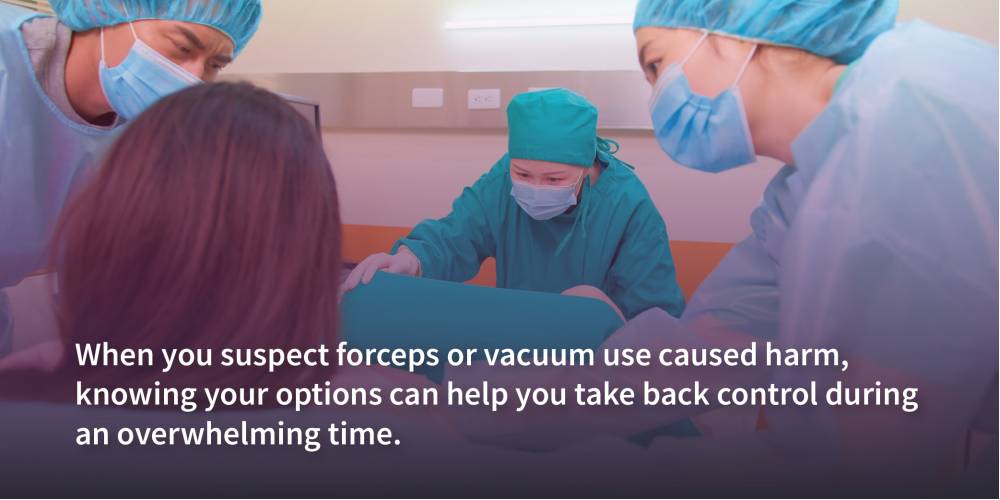
Contact a Chicago Birth Injury Attorney
If your child suffered injuries during delivery involving forceps or vacuum extraction, you may have questions about whether proper medical standards were followed. Our team has successfully represented families in birth injury cases, securing multi-million dollar settlements and verdicts for families whose children suffered preventable injuries.
Our Cook County infant injury lawyers understand these cases and work with leading experts to hold negligent doctors accountable. Contact Birth Injury Law Alliance, Ltd. at 312-462-4200 to schedule a free consultation and learn how we can help your family pursue the compensation your child deserves.

312-462-4200
60 W Randolph Street, Suite 400,
Chicago, IL 60601


Contact Our Firm
 The use of the Internet or this form for communication with the firm or any individual member of the firm does not establish an attorney-client relationship. Confidential or time-sensitive information should not be sent through this form.
I have read and understand the Disclaimer and Privacy Policy.